Trump and Xi Jinping meet for the first time in the Oval Office of the White House. What happened there and what it means for trade, AI, and Taiwan
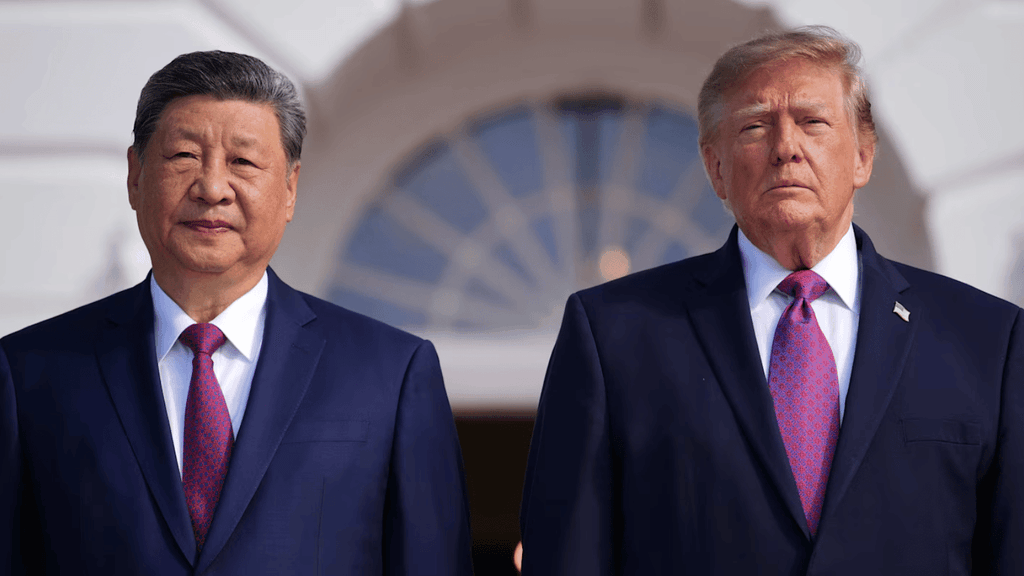
China’s President Xi Jinping’s first visit at the White House after 11 years brought pandas, a student offer and an extended tariff truce. This is what Trump-Xi summit means to their countries and world.
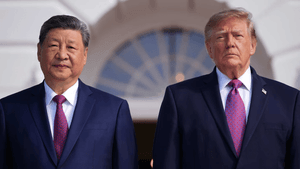
Chinese President Xi Jinping arrived at the White House on Thursday for his first Washington visit in 11 years, and the Trump-Xi summit opened with all the ceremony a state visit can offer. A military review and a flyover were the most watched part of Xi Jinping’s arrival in the states, and there was going to be a state dinner that night. There are important issues like taxes, AI, Taiwan, and the war with Iran that are being discussed beneath the pomp and circumstance. China analysts told reporters beforehand not to expect many big policy moves.
Xi’s First Washington Visit Since 2015
Xi landed at Joint Base Andrews in Maryland on Wednesday evening. Donald and Melania Trump met him on the tarmac, an unusual step, since presidents normally welcome foreign leaders at the White House. Xi and Peng Liyuan “Xi’s wife” are planning to stay until Friday morning. Before they take flight back home, they will have tea in the Red Room and see the National Archives.
It is the second Trump-Xi meeting this year. Trump visited Beijing in May, and the two first met during his current term in Busan, South Korea, in October 2025.
Friendly Words From Trump, Formal Ones From Xi
The two men struck different notes at the arrival ceremony. Trump spoke of a “truly great friendship” and recalled that the two countries’ militaries fought on the same side in World War II. Xi talked about mutual respect but stuck to the language of state relations. He said the leaders had agreed in May to build a relationship of “strategic stability,” a phrase popularized at the Busan meeting, and told Trump he was ready to “steer the giant ship” of the relationship on a steady course. He also said China’s national revival and Trump’s goal of making America great again could go hand in hand.
Pandas and 100,000 Student Invitations
Xi made the first concrete announcements. Two giant pandas will arrive at Zoo Atlanta within days, he said. The zoo has had none since 2024, when an earlier loan from Beijing expired. He also said 100,000 young Americans would be invited to study in China over the next five years, and he proposed more direct flights and closer work on counter-narcotics and law enforcement. Details on how the student program would work were not immediately available.
The Tariff Truce and the Trade Question
Trade is where a deal could matter most. A day before the summit, Treasury Secretary Scott Bessent said the two countries had agreed to extend their tariff truce by two months, to January. It was due to expire Nov. 10.
The truce was reached in Busan last fall. It lowered tariffs on both sides, paused Chinese limits on rare earth exports and included a Chinese pledge to keep buying American soybeans, a promise CBS News says China has not kept. At one point in spring 2025, tariffs between the two countries passed 100%.
Bessent said Beijing has floated a broader agreement and that Washington is open to that or to simply continuing the Busan deal. U.S. Trade Representative Jamieson Greer said a new trade board would pick a small set of goods that both sides agree to protect from disputes. Xi said China welcomes American investment and hopes Chinese companies are treated fairly in the United States.
AI, Chip Sales and the Copying Dispute
Artificial intelligence is on the agenda, and the mood going in was tense. On Sept. 8, the FBI, the National Security Agency and the Cybersecurity and Infrastructure Security Agency issued a joint advisory accusing Chinese AI developers of copying American models through distillation. That means training one AI system on the answers of another. It is common in the industry, though AI companies often ban it in their terms of service.
The agencies said Chinese firms have done this since at least late 2024 against models from Anthropic, OpenAI, Google and xAI, and they named DeepSeek, Alibaba, Moonshot AI and Z.ai. China’s Commerce Ministry called the claims groundless and threatened countermeasures if Washington suppresses Chinese AI companies on that basis.
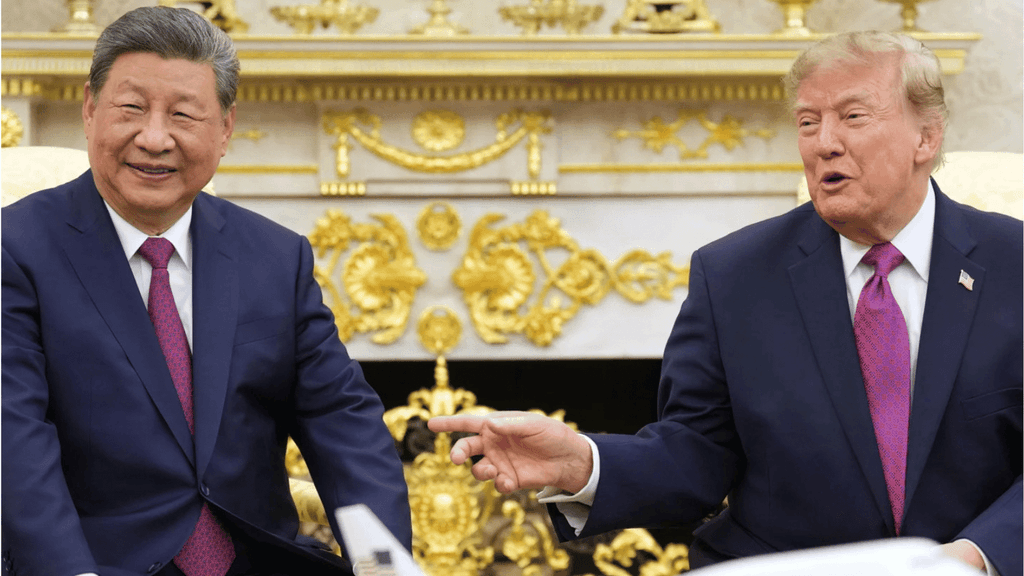
In his arrival remarks, Xi said AI development should stay under human control at all times. Trump’s most frequent concern is winning the race. He told the UN General Assembly that whoever wins “SI – super intelligence – wins.” He has also let Nvidia sell some chips to approved customers.
Taiwan and Iran Hang Over the Talks
Taiwan remains the most sensitive issue for Xi. During Trump’s May visit, Chinese state media reported that Xi warned of “clashes and even conflicts” if the matter is not handled properly. The Trump administration has shown little sign it wants to intervene, though the U.S. keeps a longstanding policy of not saying whether it would defend the island.
Iran is the other shadow. The war has disrupted shipping through the Strait of Hormuz and pushed up energy prices, a problem for Trump ahead of November’s midterm elections. Washington hopes Beijing, Iran’s biggest oil buyer, will press Tehran, though experts say China is more likely to push for de-escalation. Last week Trump brushed off a Wall Street Journal report that Chinese entities gave Iran satellite images of a U.S. base before a strike that killed three American soldiers in Jordan.
A State Dinner Heavy on Tech Executives
The East Room dinner is drawing a guest list heavy with business leaders. Reports name Jeff Bezos, Elon Musk, Sundar Pichai, Michael Dell, Jensen Huang, Sam Altman, Tim Cook and Citigroup’s Jane Fraser, with JPMorgan’s Jamie Dimon also expected. Reuters had reported that Xi might bring his own group of CEOs. That did not happen, although the South China Morning Post said a small group of Chinese executives flew in.
The Press Ban Overshadows the Pageantry
The summit is also unfolding during a fight over press access. Trump announced on Sept. 18 that CNN, MS NOW and Politico were barred from the White House. U.S. District Judge Timothy Kelly found the ban likely unconstitutional and ordered access temporarily restored. Journalists from the three outlets were turned away Thursday morning, and the outlets said a Secret Service agent confiscated their credentials. The White House said reactivating the badges took time. Reporters were let back in by midday.
The five networks that share the White House television pool, CNN, ABC, CBS, NBC and Fox News, suspended coverage of Trump’s pool events, and the ruling did not address the pool. Crews from several networks stood at Joint Base Andrews without filming, and the AP supplied video to its customers.
What Comes Next
Trump and Xi met in the Oval Office on Thursday, and no readout of those talks was available at the time of writing. The tariff truce now runs into January, the trade board has yet to be announced, and the AI copying dispute remains open. Xi is due to leave Friday after his visit to the National Archives.